Charlie setup
Charlie connects through the unified HRIS connector. This page covers the Charlie-side configuration you complete first. Once it's done, add the connector in Mesh by following Connect your HR system.
You finish with two values: a client ID and a client secret.
Before you start
You need administrator access to your company's Charlie instance, or a colleague who has it.
These steps reflect Axiad's current understanding of Charlie's configuration. Because Charlie is a third-party product, there may be variations between your experience and what this guide describes, depending on the version in use and recent updates.
If you find a significant difference, or anything that doesn't make sense, let us know through Axiad support.
Step 1 — Open API keys
-
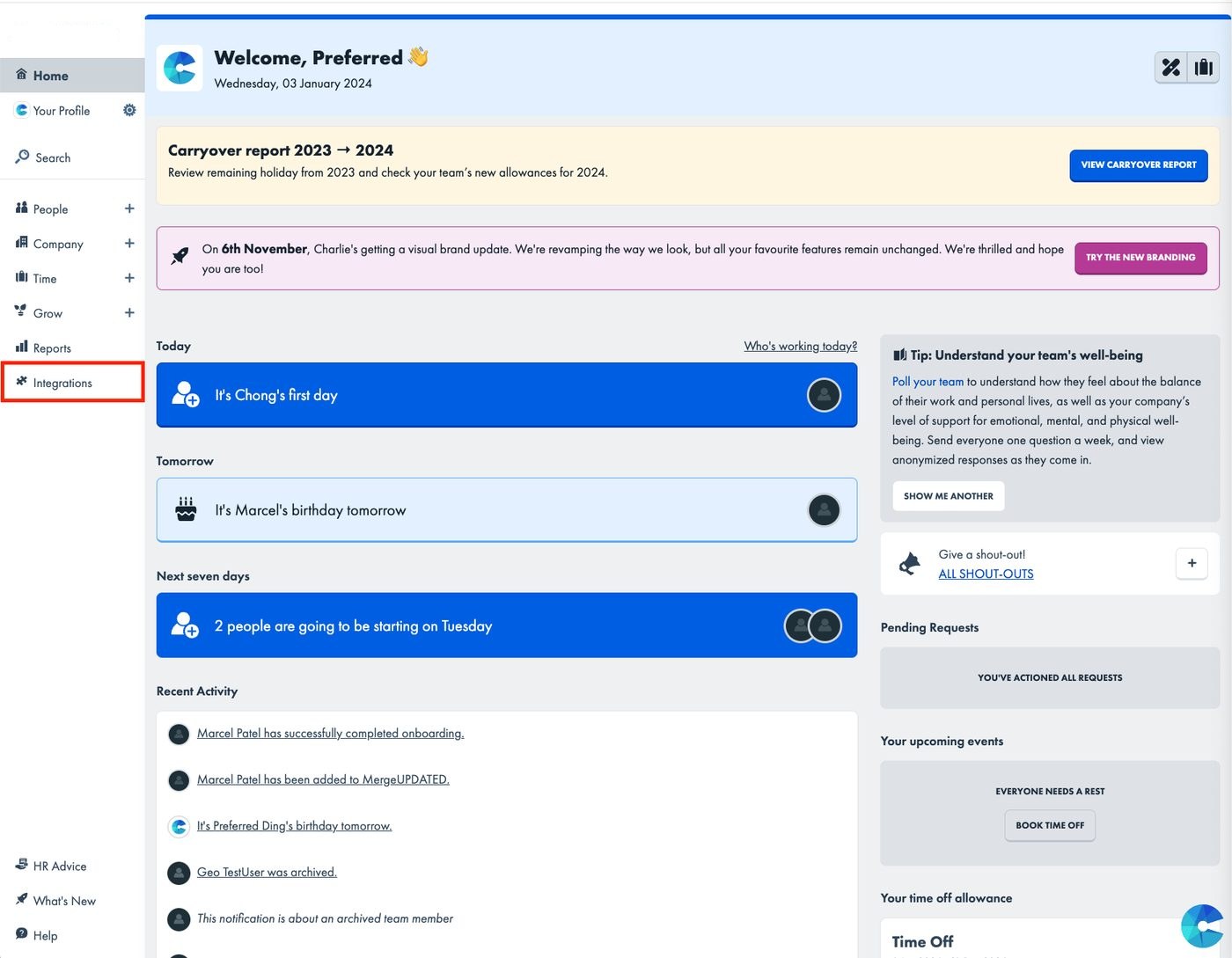
Select Integrations in the left-hand menu.
-
Select API Keys.

Step 2 — Generate the credentials
Generate the client ID and client secret for your account.
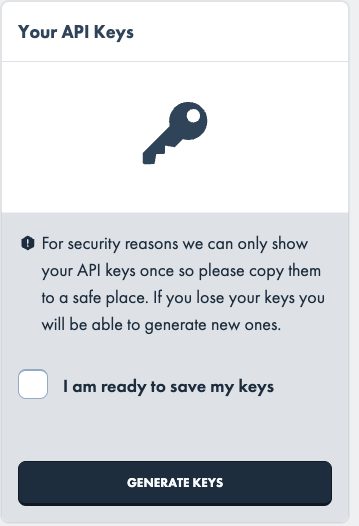
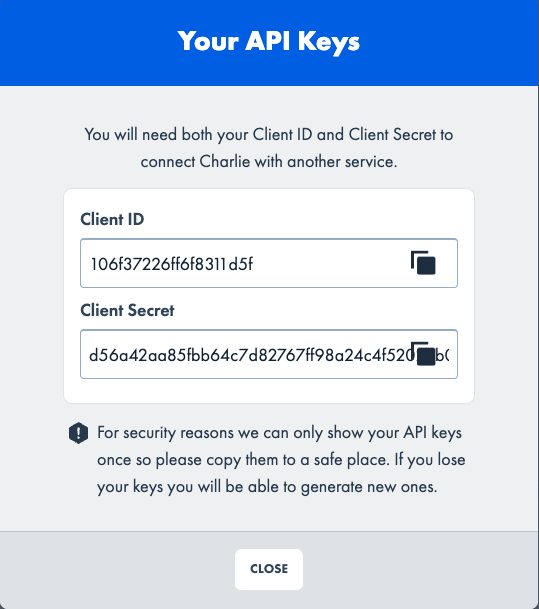
Charlie shows the client secret at generation. If credentials were generated previously, the secret is not re-displayed — you have to get it from whoever saved it, typically your HR or IT team, or generate a new pair.
Step 3 — Connect in Mesh
Follow Connect your HR system, choose Charlie in the connection window, and supply the client ID and client secret.
After connecting
The connector appears in your connectors list with Health: Initializing while the first collection runs, then moves to Good. Access is read-only: Mesh does not write back to Charlie.
If it doesn't come online, see Troubleshoot HR connectors.
Troubleshooting
| What you see | Likely cause | Fix |
|---|---|---|
| You have the client ID but not the secret | It was generated previously and shown once | Ask your HR or IT team for the stored value, or generate a new pair |
| Authentication fails | The ID and secret are from different generations | Generate a fresh pair and use both |