Overview
Axiad Mesh is an Enterprise Identity Risk Management platform that correlates identities across your systems, assesses risk, and tracks cryptographic assets. It works with your existing security infrastructure to provide a high-level, tailored visualization of your expansive organization.
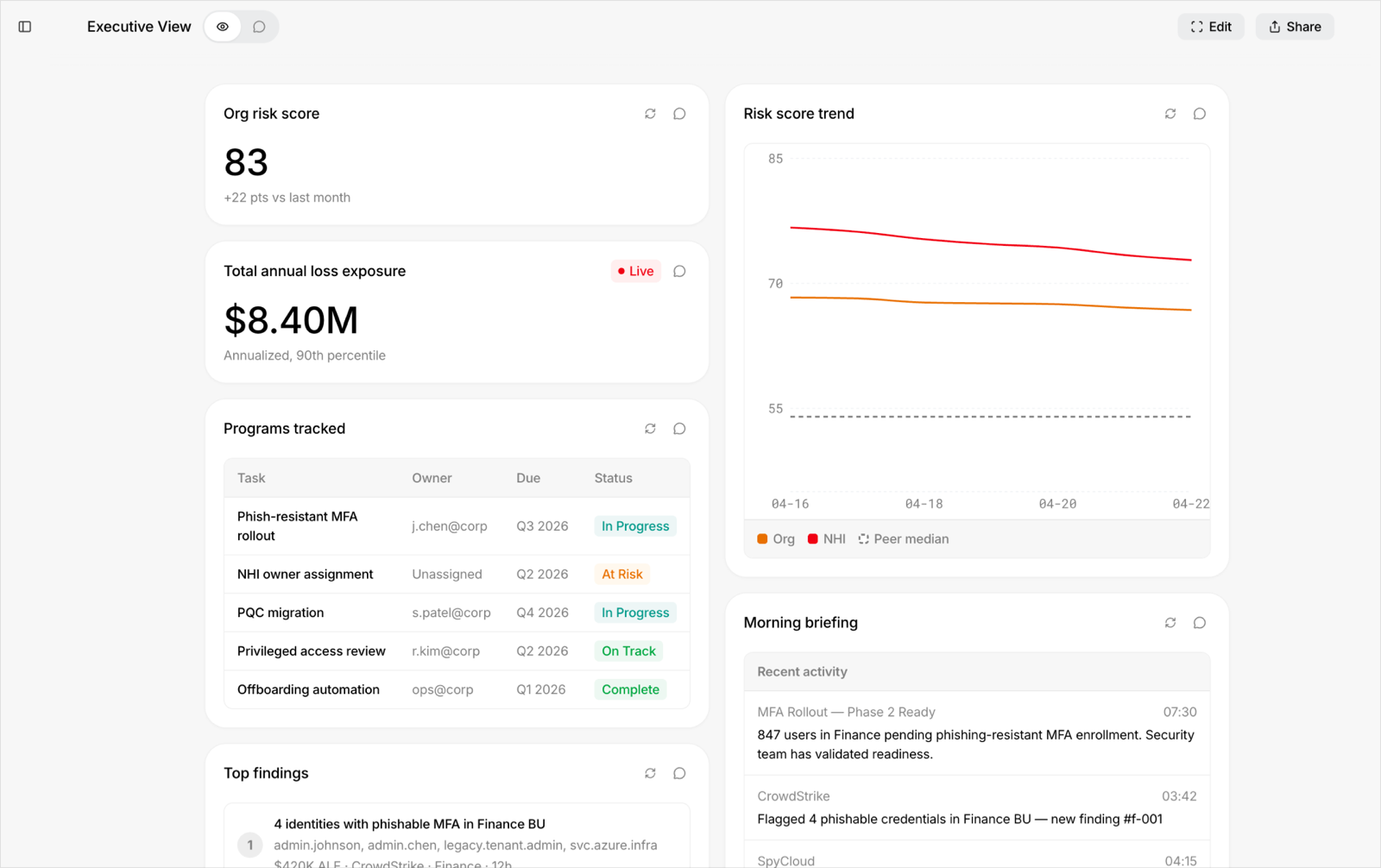
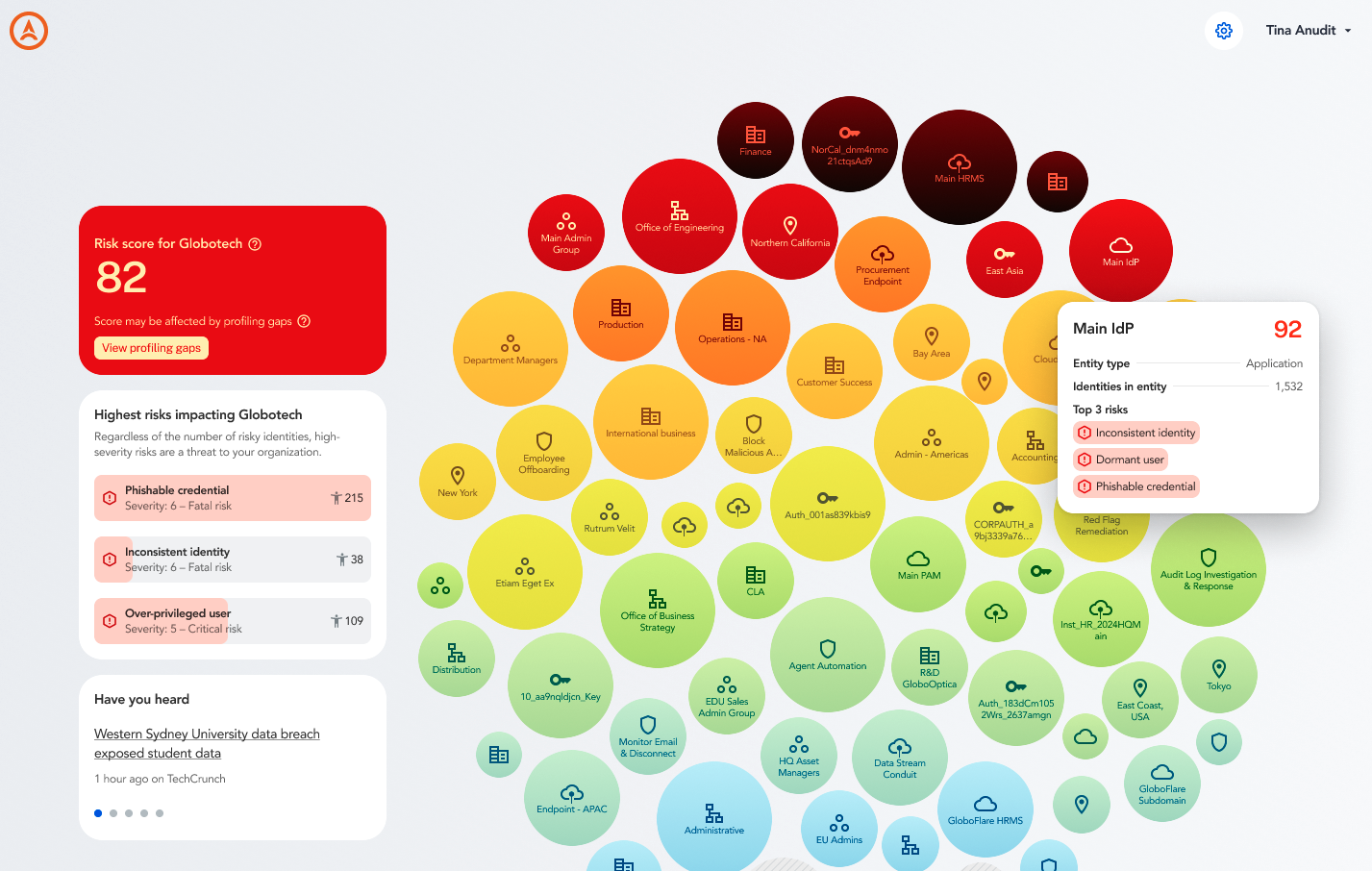
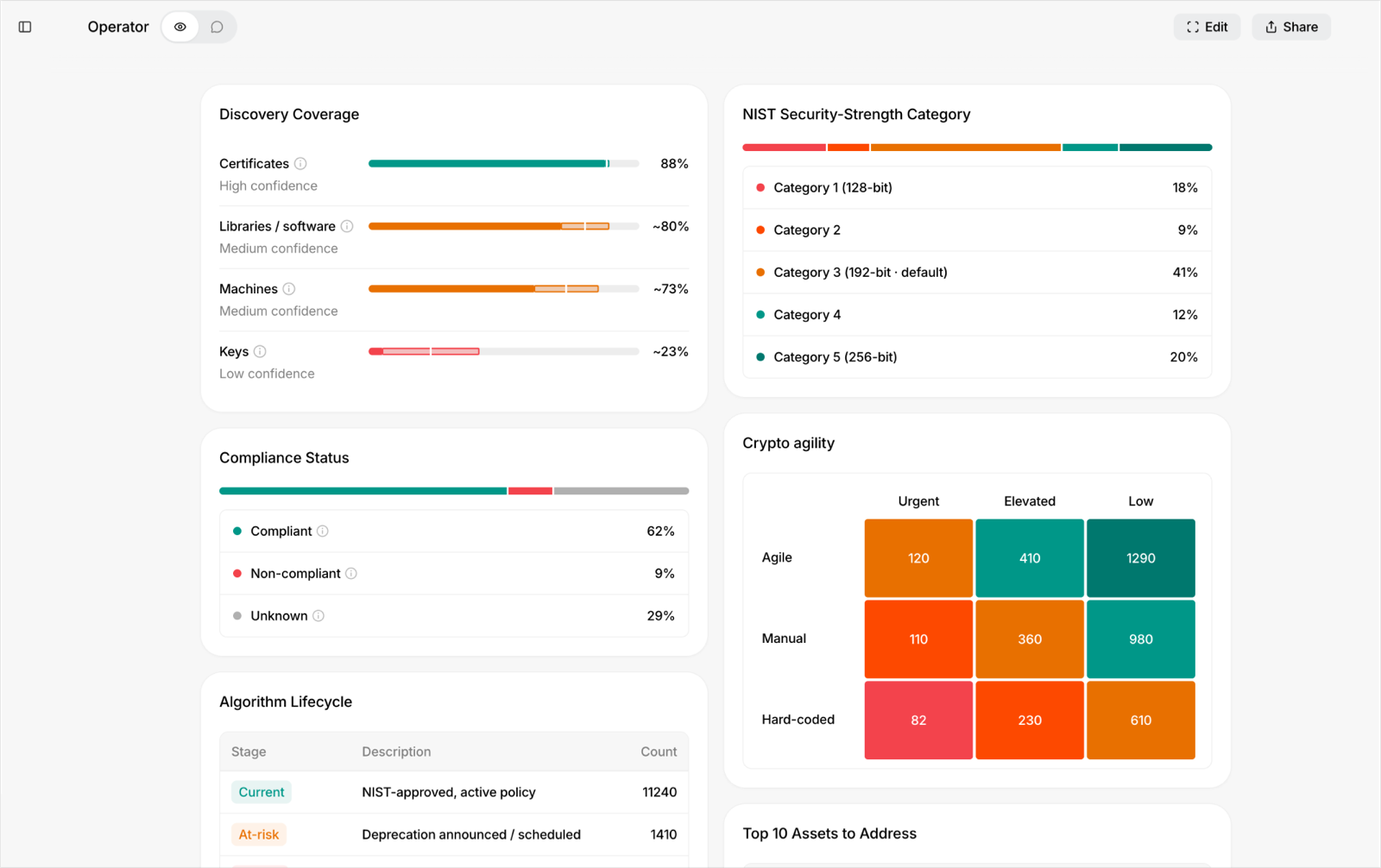
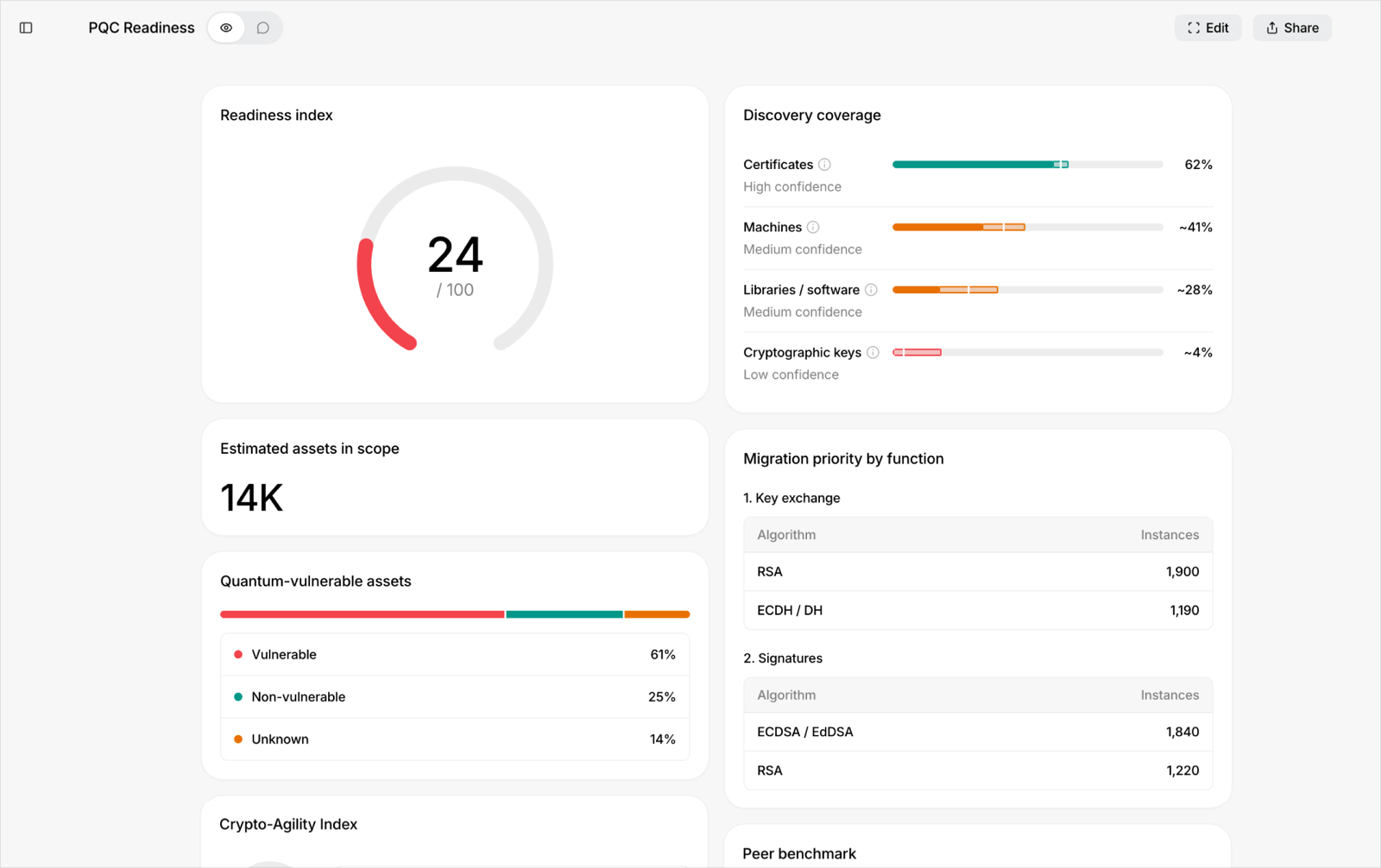
Mesh has two dashboard modes: Generative UI — agent-composed workspaces, shown above, where you describe the view you want and Mesh assembles it from live widgets — and the classic dashboards below.
Generative UI availability
The Generative UI dashboard mode (the Classic | Agentic toggle and the Workspaces experience) is enabled per tenant and is off by default while it rolls out:
- When it's off, users don't see the mode toggle, and opening Workspaces directly shows a "generative dashboard not enabled" message rather than an error.
- Enabling it is a tenant-level change — contact your Axiad representative to turn it on for your organization.
- Turning it on adds a mode; it changes nothing about your classic dashboards, data, or permissions.
Tracking all users across multiple platforms — and understanding the impact if any one of them is hacked or impersonated — is becoming more and more impossible. Axiad Mesh isn't another security solution; instead, it empowers you to see what's happening within all of your security solutions.
What does Axiad Mesh do?
Your visibility tools already surface hundreds of identity risks. The hard part isn't finding them — it's knowing which ones actually matter, who owns them, and what to fix first. When everything is flagged as urgent, nothing gets fixed.
Axiad Mesh sits above your visibility layer and turns that pile of findings into a ranked set of decisions. It pulls data from your connected systems and assesses risk across your entire identity landscape — not just human users, but the machine identities (service accounts, API keys, certificates, secrets) and AI agents that now vastly outnumber them and often run on credentials no one has audited.
What makes Mesh different is how it looks at risk. It doesn't score a single user on a single application in isolation. It looks at one identity across many applications — and many identities across many applications, with different credential types — to see how a compromise in any one place could cascade. If a user is protected by a FIDO2 authenticator in one system but signs in to another with only a password, how secure is the first system once an attacker has that password? Mesh surfaces exactly these relationships — including the identity sprawl you didn't know you had — by correlating accounts, credentials, and access levels back to a single identity.
Then Mesh ranks what it finds by impact: the financial cost of a compromised human, machine, or agent identity. That way you can see where your posture is weakest and act on the handful of risks that matter most, instead of triaging a flat list.
Because information is only useful if it leads to action, Mesh doesn't stop at telling you what's wrong. It routes remediation back into the tools your team already uses and tracks your progress — so you can show movement against your security and compliance programs, not just a longer list of findings.
How does Axiad Mesh work?
Mesh admins connect data sources through connectors — identity providers, cloud platforms, PAM, IGA, and more. The more Mesh can see, the more correlations and risk assessments it can make.
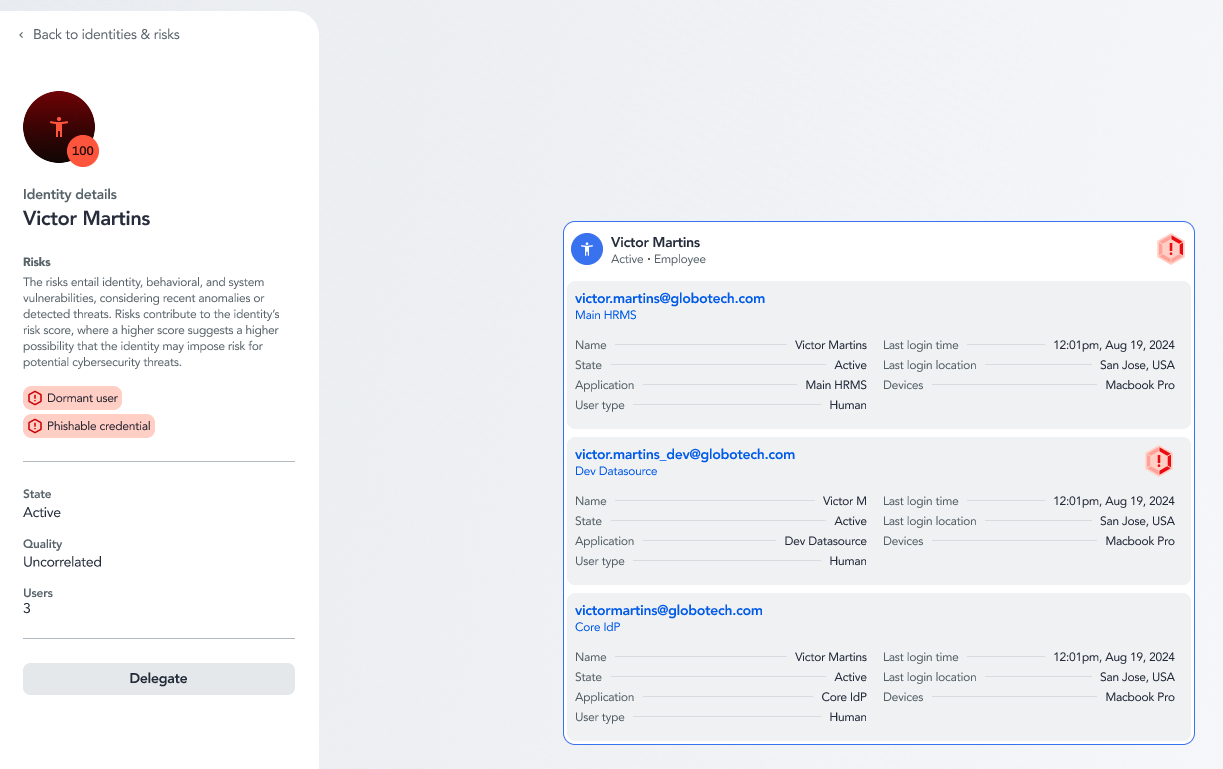
Mesh evaluates each data point and generates a risk score for individual entities — human users, machine identities, AI agents, connectors, locations, and groups — which roll up into overall scores that highlight the most and least secure parts of your environment. A score reflects more than the entity itself: it factors in the entity's level of access, the blast radius of the applications and identities it touches, the strength of the authentication in use, and more.
Beyond the raw score, Mesh ranks risks by real-world impact — dollar cost for humans, machines, and agents — and rescores dynamically as your environment changes, so the priority list stays current instead of going stale the moment it's generated.
From there, you can view the big picture or drill into any risk to see where it originates, then route remediation into the systems your team already works in and track progress against your programs.
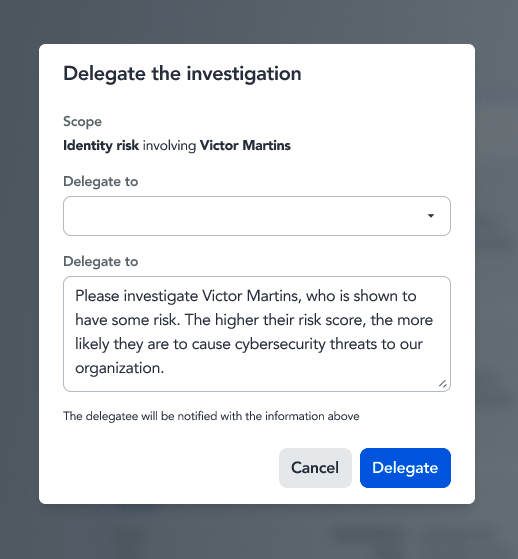
Axiad delegation
We don't want you to have to figure everything out on your own. As an industry leader, Axiad provides insight into the risk that we see and also helps you to resolve it to decrease the risk score.
Does Axiad Mesh require Axiad Conductor?
Though you can use both Axiad products to enhance your security posture, they are independent products and aren't reliant on each other to work.
Axiad Mesh prerequisites do include:
- An identity provider (IdP) for secure sign-in to the web application
- At least one connector to provide data to Axiad Mesh
Check out the Admin Guide and the User Guide to understand more about how this product works.
How this documentation is organized
- Getting Started — the fast path from zero to your first risk investigation.
- Admin Guide — configuration, tenants, connectors, and operations.
- User Guide — day-to-day usage of the Mesh dashboard.
- Connectors & Integrations — per-source setup and reference.
- API Reference — REST/GraphQL API details.
- Release Notes — what changed, chronologically.
Use search (top right) at any time to jump straight to a topic.